Learning how to bulk cook properly can save time, money and stress while making family dinners much easier.
The idea sounds simple — just cook more food and save time later. But in reality, some meals scale well, others don’t, and most families find that bulk cooking only works when it stays flexible.
This guide breaks down how to actually bulk cook meals, when to double or triple recipes, how cooking time changes, and how to turn one base recipe into a couple of different family meals without repetition fatigue.
For many households, batch cooking for families is one of the easiest ways to reduce stress and make weeknight dinners more manageable.
SAVE TIME
FAMILY FRIENDLY
SAVE MONEY
LOW STRESS
EASY TO ADAPT
Why Batch Cooking for Families Works So Well
Bulk cooking is not about meal prep perfection — it’s about reducing pressure during the week.
It helps you:
The real win is not cooking once for the whole week — it’s creating flexible meals that stretch over 2–3 dinners naturally.
How to Bulk Cook: Rules for Doubling and Tripling Recipes
When scaling savoury meals like chilli, curries, stir fries, and pasta sauces, the process is mostly straightforward — but there are a few key adjustments that matter.
Do you double all ingredients?
Mostly yes — but with judgement
These ingredients scale reliably:
- meat (chicken, beef, lamb, mince)
- vegetables
- canned tomatoes
- beans and lentils
- stock
- sauces and marinades
These form the structure of the dish, so they increase in a straight line.
Ingredients that need adjustment
Seasoning and spices
Flavour builds differently in larger volumes.
Includes:
- chilli powder
- curry powder
- garlic
- stock cubes
👉 Rule: Start slightly lower (around 1.5x when doubling), then adjust at the end.
Aromatics (garlic, ginger, onion)
These intensify quickly in bulk cooking.
👉 Rule: Increase gradually rather than automatically doubling.
Oil and fat
Too much creates heaviness, especially in mince-based dishes.
👉 Rule: Increase lightly, then adjust during cooking if needed.
Liquids (stock, sauces)
This depends on the recipe type:
- chilli → minimal change
- stir fry → small increase
- curry/stew → moderate increase
👉 Rule: Add gradually to control consistency.
How to Double a Recipe (and Triple It Without Ruining Dinner)
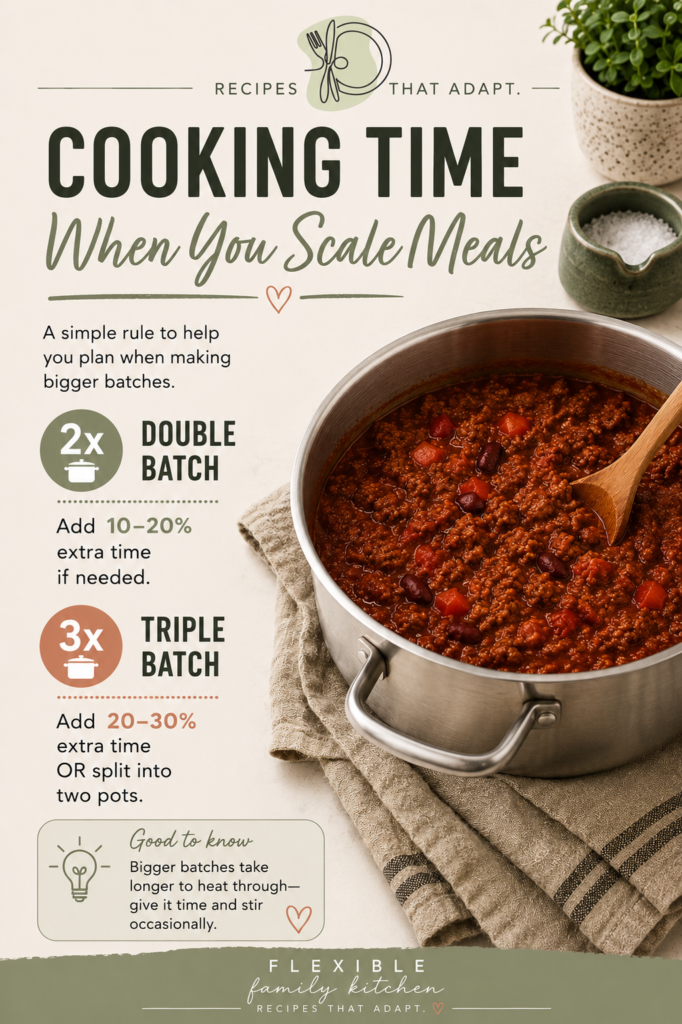
Simple rule:
- Double batch → add 10–20% extra time if needed
- Triple batch → add 20–30% OR split into two pots
But cooking time is not about quantity alone.
It changes based on:
- depth of the pot
- heat circulation
- surface area
- how crowded the pan is
A wide pan behaves very differently to a deep pot.
Learning how to double a recipe is often the easiest starting point before attempting larger batch cooking.
Cook Once Eat Twice Meals: Real Recipe Examples
One of the easiest ways to learn how to bulk cook is to start with meals you already make often.
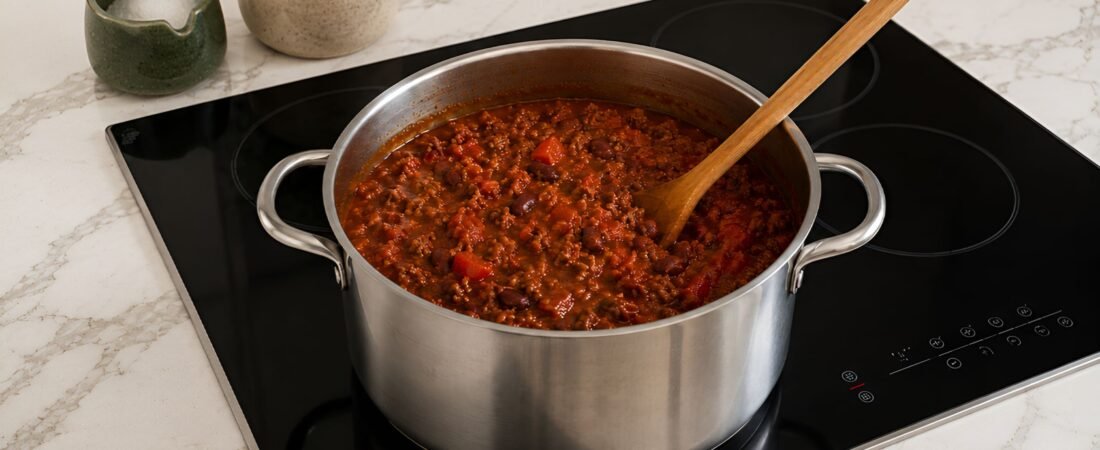
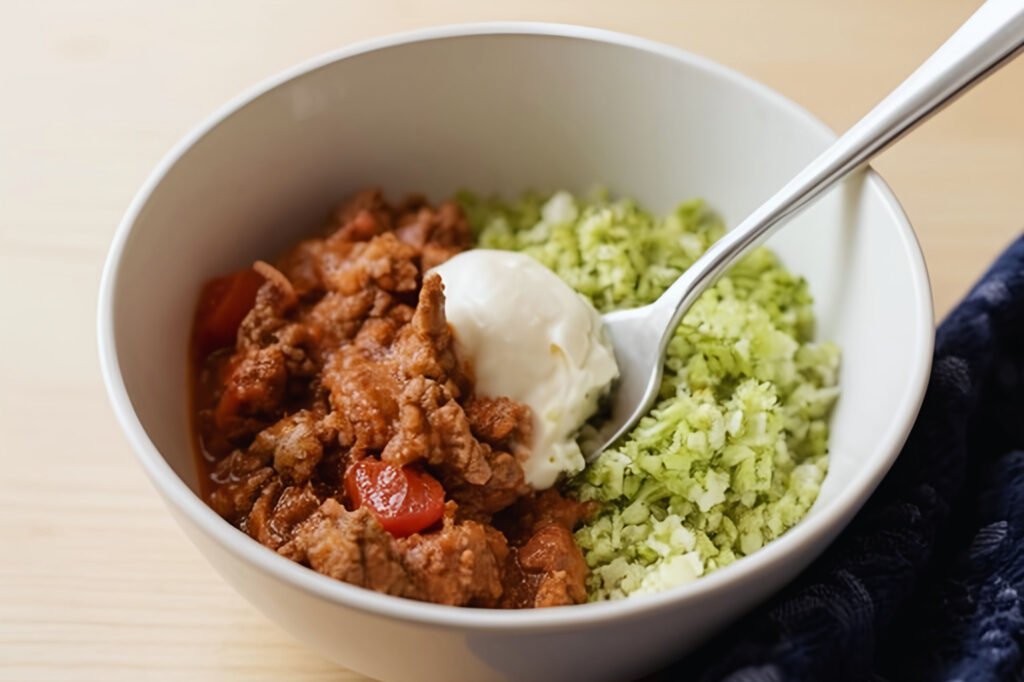
Chilli Con Carne
A reliable base that handles scaling well.
- Rice bowls
- Baked potatoes
- Tacos or nachos
👉 Why it works: It’s slow-cooked, flexible, and improves with time rather than becoming repetitive.
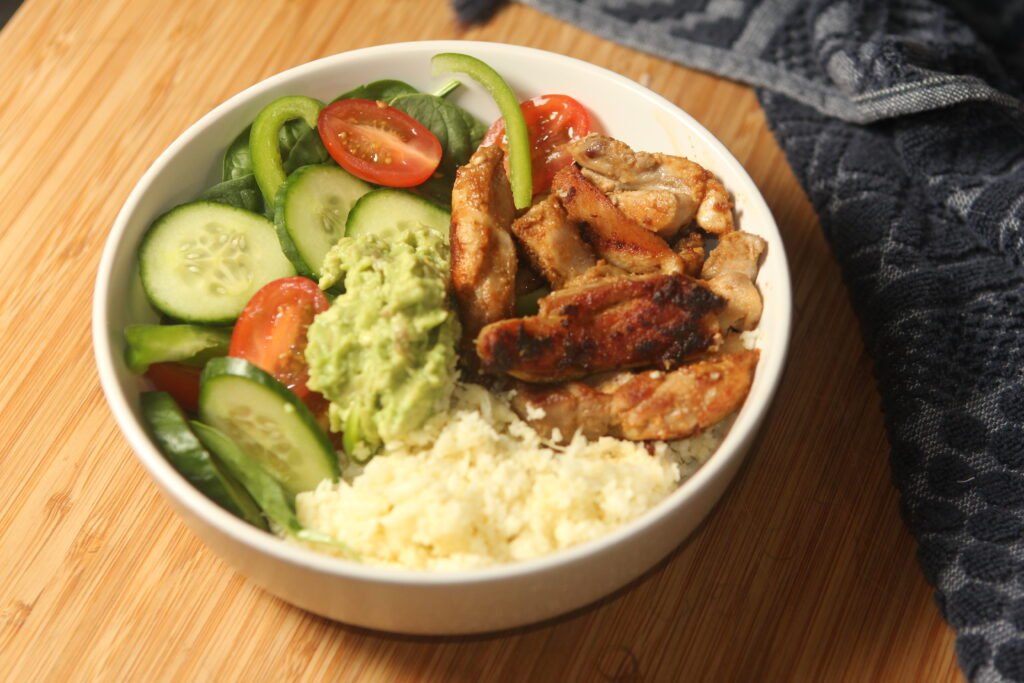
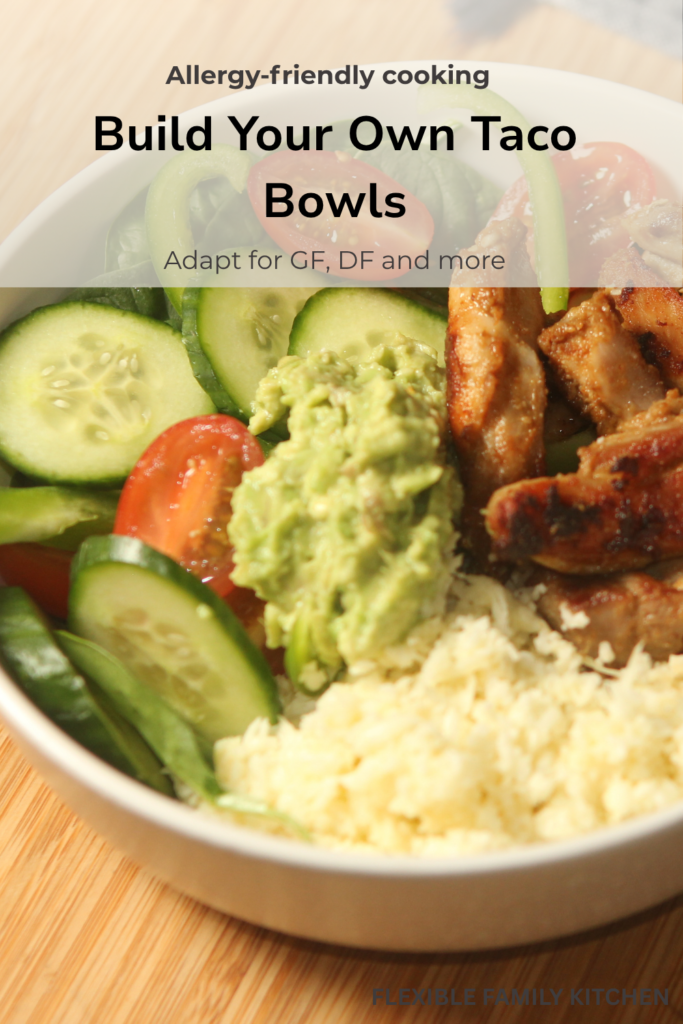
Chicken Taco Bowl
This is a good example of a format-shifting meal — the base stays the same, but the structure changes.
Night 1: Chicken taco bowls with rice and toppings
Night 2: Wraps or burritos using the same filling
Night 3: Quesadilla-style toasties or quick lunch wraps
👉 Why it works: The chicken is flexible, but each meal changes texture and format, so it doesn’t feel repetitive.
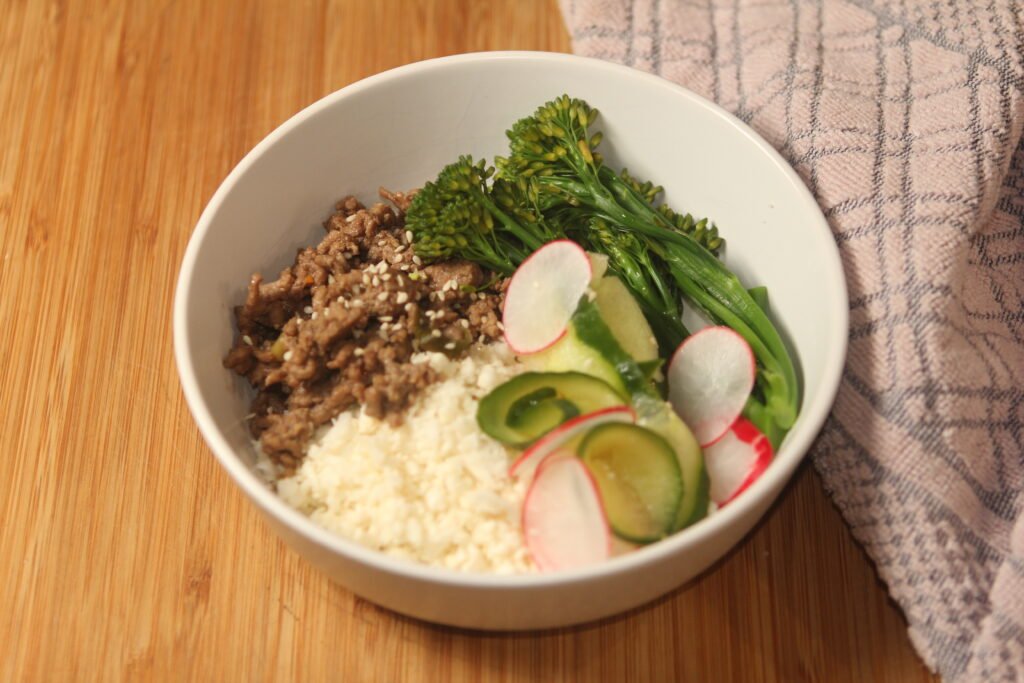
Korean Beef Bowl
This is a strong example of a flavour-driven base that works across different meal types.
Night 1: Korean beef bowls with rice and vegetables
Night 2: Korean beef omelette with rice or salad
Night 3: Korean beef stir fry with rice noodles or leftover rice
👉 Why it works: The sauce carries the flavour, allowing it to move between rice, eggs, and noodles without needing changes.
Bolognese or Pasta Sauce Base
A classic bulk cook staple that adapts easily.
- Spaghetti
- Lasagne
- Pasta bake or stuffed potatoes
👉 Why it works: Neutral flavour base that pairs well with multiple starches and formats.
The best cook once eat twice meals are the ones that can shift into a new format the next night.
How Many Meals You Actually Get
This is where expectations matter.
For a family of four:
- Double batch → usually 2 meals
- Triple batch → usually 3 meals max
Not a full week — and that’s important.
Bulk cooking works best when it supports the week, not replaces every meal.
Best Meals to Bulk Cook for Easy Family Dinners
If you’re building a simple meal prep for families routine, these are some of the easiest meals to start with.
These scale well and stay flexible:
- chilli con carne
- Mexican spiced meats
- curries
- pasta sauces
- stews
- shredded meats in sauce
These are forgiving, freezer-friendly, and easy to repurpose.
Bulk Cooking Tips That Actually Help
Build around a base
Protein plus sauce gives you the most flexibility later.
Taste at the end, not the start
Flavour settles as it cooks in larger volumes.
Don’t over-scale everything
Bulk cooking works best in moderation, not extremes.
Think in meals, not portions
You’re not just increasing food — you’re creating future dinners.
Flexible Family Cooking Notes
Bulk cooking can feel like a big shift at first, but it doesn’t have to be all or nothing.
Start with one meal. Double it. See how it fits into your week.
Over time, you’ll build a rhythm that saves time, cuts waste, and makes family dinners feel far less stressful.
Because flexible family cooking isn’t about cooking more.
It’s about cooking smarter.
Why Bulk Cooking Makes Family Dinners Easier
Bulk cooking makes family dinners easier because it reduces the daily pressure of deciding what to cook and starting from scratch.
How to Start Bulk Cooking (Without Overcomplicating It)
If you’re wondering how to bulk cook without overcomplicating it, start with one familiar meal.
Good first choices are:
- chilli con carne
- bolognese
- taco meat
- curries
- shredded chicken
Start by doubling one recipe instead of trying to prep an entire week.
Focus on meals that:
- freeze well
- reheat well
- can be used in different ways
- suit your family’s regular routine
The goal isn’t to stockpile dozens of meals.
It’s to make tomorrow night easier.
That’s what actually works in real family kitchens.
More Flexible Family Recipes
Frequently Asked Questions
Tried bulk cooking at home?
Leave a comment and share your favourite cook once eat twice meal — it helps other families more than you think.
Real Food For Real Families
These recipes are designed to help you cook one flexible meal that works for everyone — without making multiple dinners.
I focus on simple ingredients, practical swaps and real-life cooking.
Because flexible family cooking should reduce stress, not add to it.

Leave a Reply