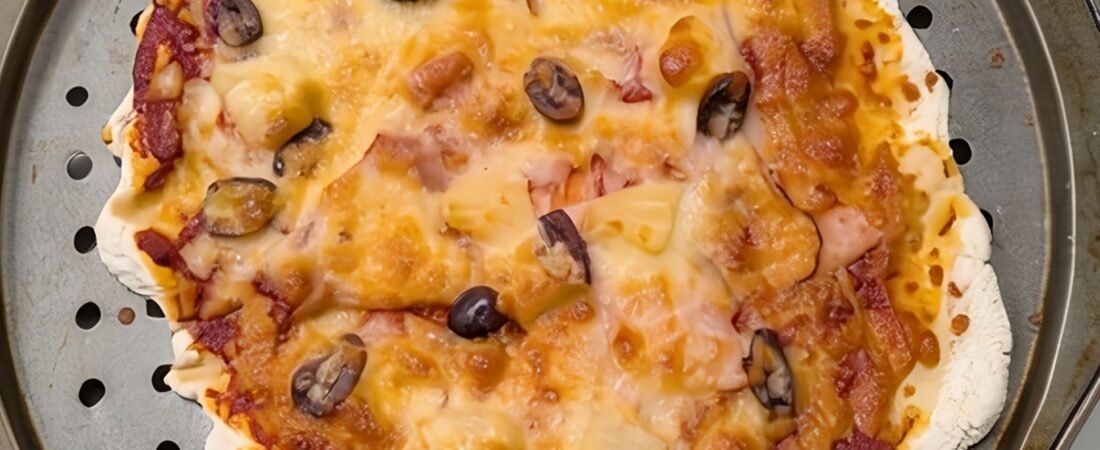
For the gluten intolerant in our house, this is our go-to gluten free pizza dough recipe that actually holds together, rolls easily, and bakes into soft, family-friendly pizza bases.
If you’ve ever ended up with gluten free pizza dough that’s crumbly, dense, or hard to shape, this recipe will change that. It’s a soft, flexible gluten free pizza dough recipe that rolls without cracking and works for pizza bases, scroll-style bakes, and freezer meal prep.
It’s designed for real family kitchens — using a balanced mix of gluten free flour, tapioca flour, and psyllium husk so the dough is soft, flexible, and workable.
We do pizza night every Saturday with a mix of gluten eaters and gluten intolerant family members. I always make pizza bases in bulk and par-bake extras for the freezer so homemade pizza night feels easy instead of stressful.
This post may contain affiliate links, which means I may earn a small commission if you purchase through them — at no extra cost to you. These links help support Flexible Family Kitchen and allow me to continue creating free, adaptable recipes. I only share products I personally use or genuinely recommend.
Why This Recipe Works
- Soft gluten free dough that actually holds together when rolled
- Doesn’t crack or crumble like many gluten free doughs
- Easy to roll or press into pizza bases
- Balanced structure using psyllium husk, tapioca flour and egg
- Family-friendly and freezer-friendly
- Works for pizza, scrolls, and simple baking
Ingredients
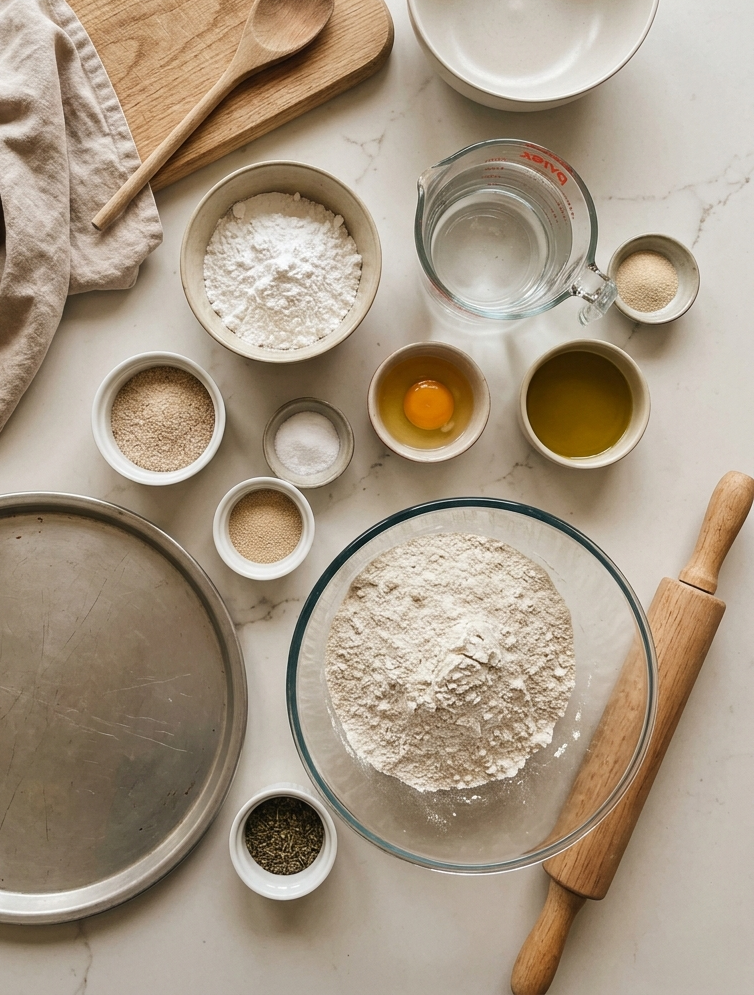
- 400 g gluten free flour blend – Base structure. Different blends absorb liquid differently, so slight adjustments may be needed.
- 100 g tapioca flour – Adds stretch and softness so the dough doesn’t crack when rolled.
- 2 ½ tsp psyllium husk powder (finely ground psyllium husk) – Essential for structure and elasticity. This is what holds the dough together.
- 1½–2 tsp gluten free baking powder – Helps lighten the dough.
- 1 tsp salt – Flavour balance.
- 2 tsp dried yeast (optional but recommended) – Improves softness and gives a better rise.
- ½ tsp garlic powder – Optional flavour.
- ½–1 tsp dried herbs – Optional seasoning.
- 1 egg – Provides binding and structure.
- 1–2 tbsp olive oil or melted butter – Adds softness and prevents dryness.
- 310–340 ml warm water – Start lower and adjust. Dough should feel soft and slightly sticky.
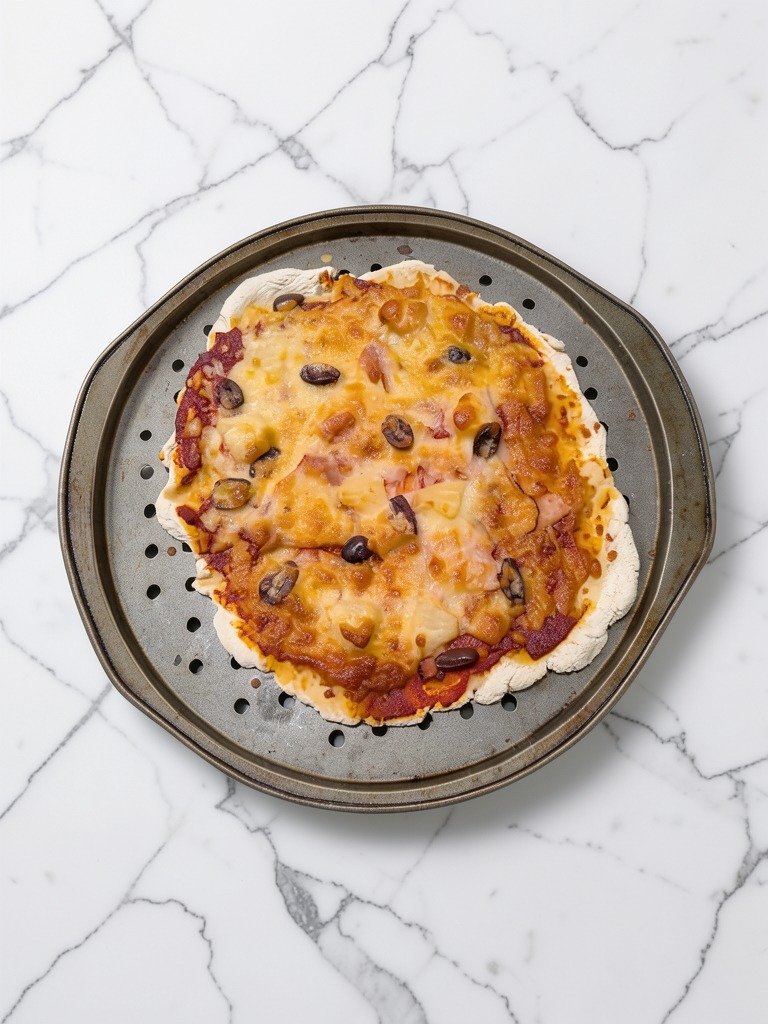
This dough creates soft homemade gluten free pizza bases that hold together well enough to slice and pick up.
Important Tapioca Note
Tapioca starch is what gives this dough elasticity and flexibility.
If you need to avoid it, you can replace with:
- extra gluten free flour blend (firmer result), or
- rice flour + potato starch blend (better balance)
Without tapioca, the dough will be less stretchy and more delicate to handle.
Psyllium Husk vs Psyllium Husk Powder in Gluten Free Baking
You may see both “psyllium husk” and “psyllium husk powder” used in gluten free recipes, but they are slightly different forms of the same ingredient.
I use psyllium husk powder (finely ground psyllium husk) in this recipe because it blends more evenly into the dough and creates a smoother, more consistent texture — especially important for pizza bases and scrolls.
If you only have whole psyllium husks, the recipe will still work, but you may need a slightly longer resting time so it fully hydrates and forms a gel.
Both work — the difference is texture and hydration speed.
Some psyllium husk powders can slightly darken gluten free dough depending on the brand used — this is completely normal.
Step-by-Step Instructions
Conventional Method
- Combine all ingredients in a large bowl.
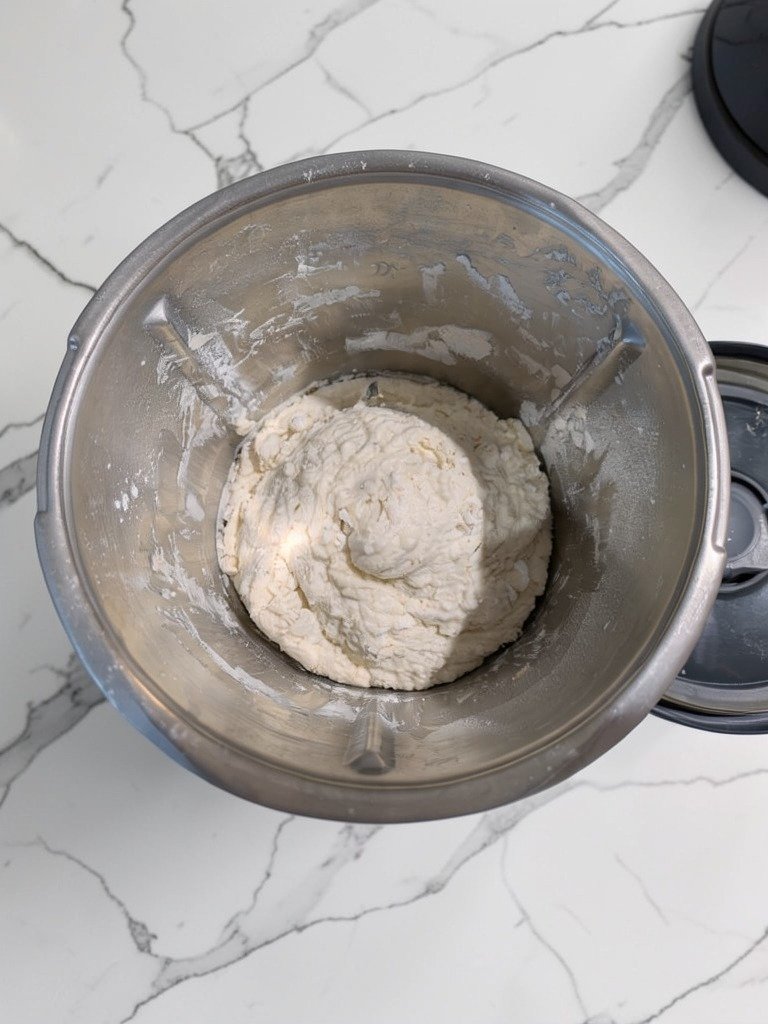
- Mix until a soft, slightly sticky dough forms.
- Cover and rest for 10–15 minutes (important for hydration).
- Lightly grease pizza trays or line with baking paper.
- Divide dough into 2–3 portions.
- Roll or press into bases (keep slightly thicker than wheat dough).
- Add toppings.
- Bake at 190°C (fan) for 17–20 minutes.
Thermomix Method
- Add all ingredients to the bowl.
- Mix for 30 seconds / speed 4 to combine.
- Rest 10–15 minutes.
- Divide, shape, top, and bake as above.
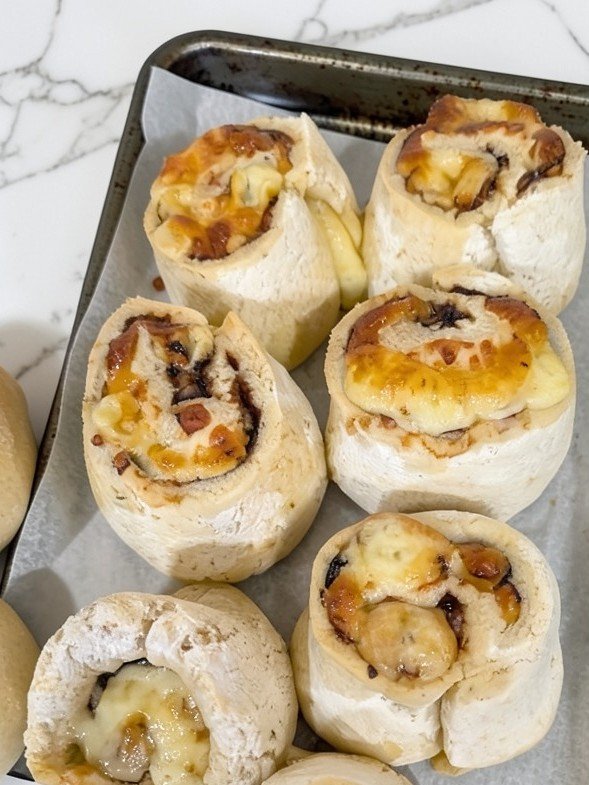
Savoury Scrolls (Using This Dough)
This gluten free pizza dough also works beautifully as savoury scrolls, making it a great all-in-one family dough. Fill with your choice of:
- Ham and cheese
- Vegemite and cheese
- Tomato paste and pizza topping
- Line a tray with baking paper.
- After resting, roll dough into a rectangle (not too thin).
- Add filling evenly, be sure not to overfill or else it will be too difficult to roll.
- Roll from the long edge into a log.
- Slice into scrolls and place on tray.
- Let rest 10–15 minutes.
- Bake 18–25 minutes until golden. These scrolls are best eaten fresh. If eating leftovers, I recommend heating in an air fryer for 1 minute on 180°C or placing in the microwave for 30 seconds. The dough will be lovely and soft once it’s warm.
💡Tip: Slightly thicker dough = softer scrolls.
Pantry Notes
- Gluten free flour blends vary — hydration may need adjusting
- Psyllium husk is essential for structure
- Slight stickiness is normal
- Resting time improves texture and reduces cracking
- Dough should feel soft, not dry
Tools I Use For Pizza Night
- Thermomix (a stand mixer or large mixing bowl would also work just as well)
- Pizza cutter wheel – makes slicing quicker and cleaner for family-style serving
- Pizza trays – I use these for both baking and par-baking bases for freezer meals
- Silicone spatula – for scraping dough out of the bowl.
How to Adapt This Gluten Free Pizza Dough Recipe
- Dairy-free → Use olive oil instead of butter
- Egg-free → Replace with 1 tbsp chia seeds + 3 tbsp water. Let sit for 5–10 minutes until gel forms before adding
- Gluten-free → This dough is naturally gluten free.
- Low carb → I’m currently working on a low carb version of this recipe for you — watch this space. This will use a fathead-style dough.
- Carb-up → Use my Easy Pizza Dough recipe instead
- Nightshade-free → Top with hummus, mashed pumpkin or my Nightshade-Free Pasta Sauce
- Soy-free → Naturally soy free.
- Corn-free → Check herbs and spices for anti-caking agents.
- FODMAP-friendly → The dough is naturally low FODMAP if garlic powder is removed. Avoid garlic in the dough and use garlic-infused oil instead if needed.
- Nut-free → No changes needed
👉 Learn how to confidently swap everyday ingredients like flour, stock, pasta, soy sauce, and baking staples in our Pantry Swaps for Allergy-Friendly Cooking for easy adaptable cooking.
⚠️ The more swaps you make, the more the final result may vary — start simple where possible.

Gluten Free Pizza Dough Recipe
Ingredients
Method
- Pre heat oven to190°C (fan-forced)
- Combine all ingredients in a large bowl.
- Mix until a soft, slightly sticky dough forms.
- Cover and rest for 10–15 minutes (important for hydration).
- Lightly grease pizza trays or line with baking paper.
- Divide dough into 2–3 portions.
- Roll or press into bases (keep slightly thicker than wheat dough).
- Add toppings and bake for 17-20 minutes until golden and cooked through.
- Line a tray with baking paper.
- After resting for 10-15 minutes, turn onto a floured surface or baking paper and roll into a rectangle. Don’t roll too thin — keep some thickness for softness.
- Top with ham and cheese. Don't over fill.
- Starting from the long edge, gently roll the dough into a log.
- Place scrolls on the tray, leaving a little space between them. Once all pieces are on the tray, sprinkle over some grated cheese and let sit for 15 mins.
- Bake for 18-25 mins, until golden and cooked through.
These recipes are designed to help you cook one flexible meal that works for everyone — without making multiple dinners.
I focus on simple ingredients, practical swaps, and real-life cooking. You won’t find perfectly styled food or strict macro tracking here — just balanced, adaptable meals for busy families.
Because food should nourish you — not control you.
This is what flexible family cooking looks like in real life.
Serving Suggestions
- Homemade gluten free pizza night
- Ham and cheese lunchbox scrolls
- Gluten free pizza puffs for lunchboxes
- Freezer-friendly homemade pizza bases
- Garlic pull-apart bread using leftover dough
FAQ
Why does gluten free pizza dough not rise?
→ Gluten free pizza dough often doesn’t rise the same way traditional dough does because it doesn’t contain gluten, which is what normally traps gas bubbles from the yeast.
Instead, gluten free dough relies on ingredients like psyllium husk, starches, and eggs to create structure and hold any air pockets.
If your dough isn’t rising, the most common causes are:
- inactive or expired yeast
- water that is too hot (kills yeast) or too cold (slows activation)
- not enough resting time in a warm environment
- missing structure ingredients like psyllium husk or starch balance
It’s also important to note that gluten free dough will never double in size the same way wheat dough does — a slight lift and improved softness is a better expectation than a dramatic rise.
Why is my gluten free pizza dough sticky?
→ A slightly sticky texture is completely normal for gluten free dough. It should feel soft, hydrated, and a little tacky rather than dry or stiff.
If it feels too wet, it usually needs more resting time rather than more flour. The psyllium and starches continue absorbing liquid as the dough rests.
Why is my gluten free pizza base dense?
→ Dense gluten free pizza bases are usually caused by:
- not resting the dough long enough
- over-handling or over-adding flour during shaping
- incorrect balance of wet to dry ingredients
Resting is essential in gluten free baking because it allows the psyllium and starches to fully hydrate and build structure.
Can I make gluten free pizza dough ahead of time?
→ Yes. You can store the dough in the fridge for up to 24 hours after mixing.
For best results, bring it back to room temperature before shaping so it becomes easier to handle and stretch.
What makes gluten free pizza dough hold together?
→ Gluten free pizza dough holds together because of a combination of binders and starches that replace gluten’s natural elasticity.
In this recipe, structure comes from:
- Psyllium husk powder → forms a gel that binds ingredients together and creates stretch
- Tapioca flour → adds elasticity and softness so the dough can be rolled without cracking
- Egg → helps bind everything and improves structure during baking
- Resting time → allows the psyllium to fully hydrate and strengthen the dough
Without these elements, gluten free dough can become crumbly, dry, or difficult to shape.
The key is balance — too little binding and it falls apart, too much and it becomes dense or chewy.
Can I use this dough for more than pizza?
→ Yes — that’s exactly what makes this gluten free pizza dough recipe so useful.
It can also be used for:
- garlic pull-apart bread
- ham and cheese scrolls
- mini pizza puffs for lunchboxes
Gluten free dough is at its best on the day it’s baked, but leftovers can be reheated in an air fryer or microwave to soften.
Can I freeze gluten free pizza bases?
→ Yes. The best method is to pre-bake the bases first, then cool completely before freezing.
Stack with baking paper between each base and store in an airtight container or freezer bag.
Why is tapioca important in gluten free dough?
→ Tapioca helps create elasticity and softness in gluten free dough, making it easier to roll and shape without cracking.
Without it, the dough will still work, but it may be more delicate and less stretchy.
Can I skip the egg?
→ Yes. Replace the egg with:
👉 1 tbsp chia seeds + 3 tbsp water (rest for 5–10 minutes until gelled)
This helps maintain binding and structure, although the final dough will be slightly softer.
More Adaptable Recipes You’ll Love
If you regularly cook for different dietary needs, having a flexible approach makes everything easier. My flexible family cooking method shows you how to build meals that work for everyone without cooking multiple dinners.
Enjoyed this easy pizza dough recipe? Try these adaptable recipes next:
Tried This Recipe?💬
Leave a comment and share what swaps you used — it helps other families more than you think!

Leave a Reply