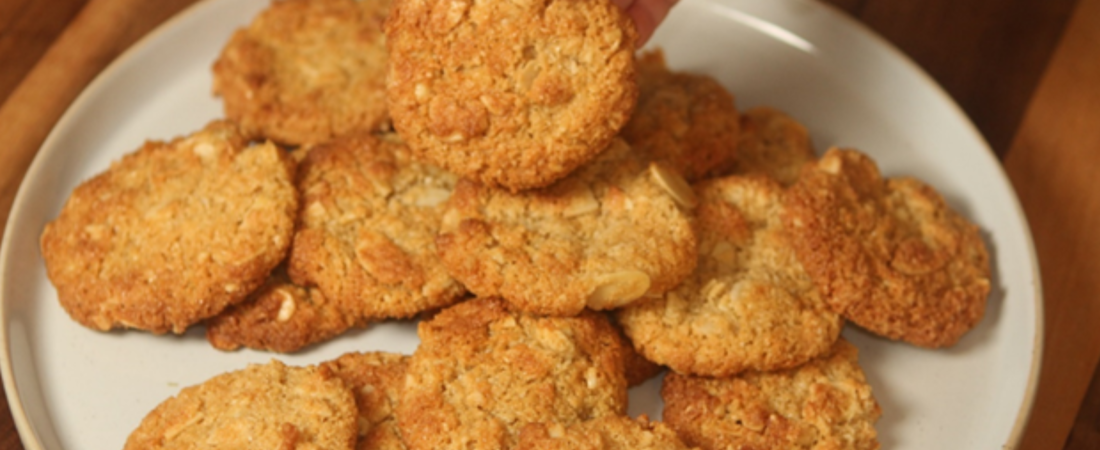
This ANZAC-style biscuits recipe is a flexible take on the classic, designed for families who need options without oats, gluten, eggs, or nuts. Whether you’re looking for oat free ANZAC biscuits or a nut free ANZAC biscuits option, this version keeps the golden edges and chewy centre people expect.
It’s a simple, adaptable biscuit recipe that shows what actually works when traditional ANZAC biscuits need to be adjusted for real-life dietary needs.
ANZAC biscuits are one of those recipes tied to tradition, but for many families, the original version doesn’t always fit. This ANZAC-style biscuits recipe was created to keep that familiar flavour and texture, while allowing for common food intolerances and pantry limitations.
Why This Recipe Works
- One flexible ANZAC-style biscuits recipe base
- Works with multiple dietary adaptations
- Pantry-friendly ingredients
- Classic chewy centre and crisp edges
- Great for lunchboxes and batch baking
Ingredients
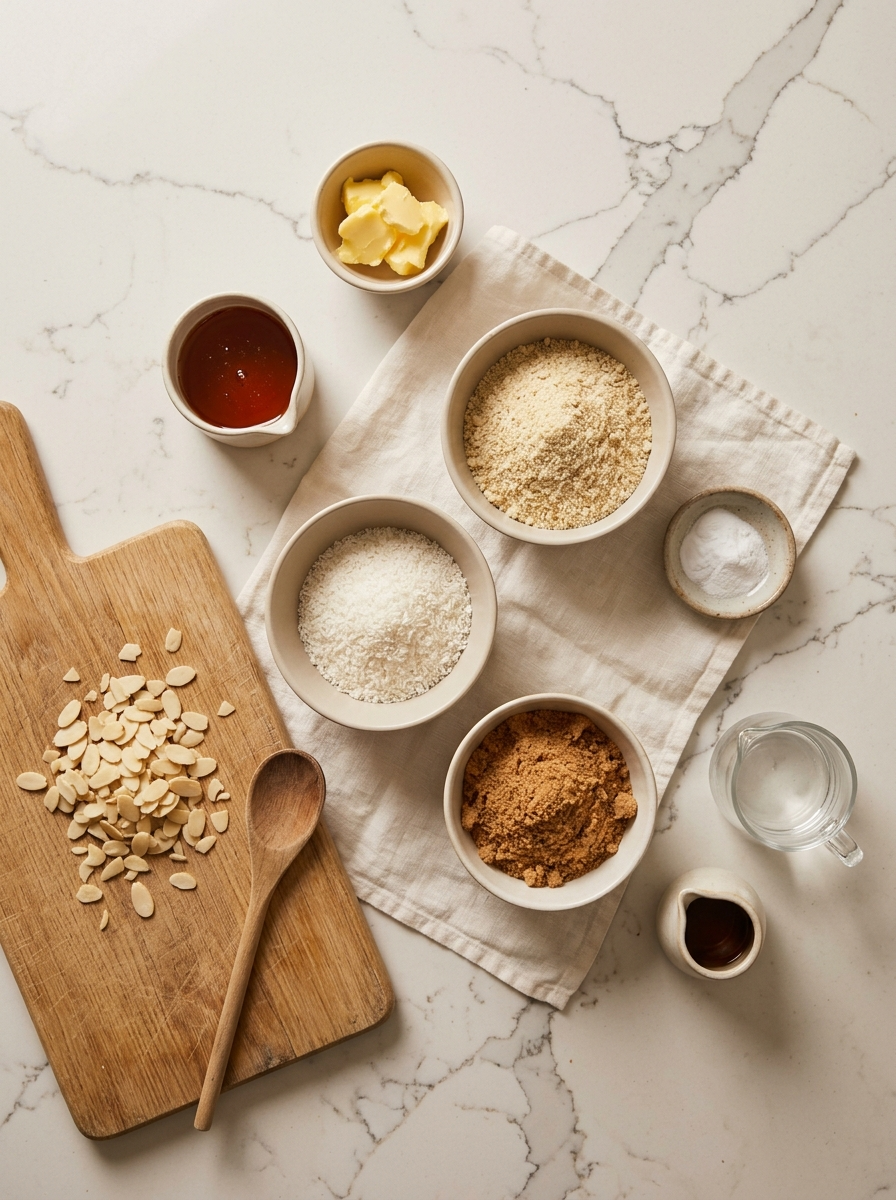
Here’s a look at what you’ll need to make these oat free ANZAC-style biscuits.
- Almond meal – provides structure and soft texture
- Flaked almonds – adds crunch and texture
- Desiccated coconut – classic flavour and chew
- Butter – binds and adds richness
- Golden syrup – essential for chew and flavour
- Brown sugar – caramel depth
- Vanilla extract – optional flavour enhancer
- Bicarb soda – creates spread and texture
- Water – activates bicarb
Step-by-Step Instructions
Conventional Method
- Preheat oven to 160°C (fan-forced) and line two baking trays.
- Melt butter, golden syrup, sugar and vanilla.
- Stir in dry ingredients until combined.
- Add bicarb soda mixed with water and stir through.
- Roll into balls, flatten slightly, and bake for 12–15 minutes.
- Cool completely before serving.
Thermomix Method
- Preheat oven to 160°C (fan-forced) and line two baking trays.
- Add butter, golden syrup, brown sugar and vanilla. Mix 3 minutes / 80°C / speed 2.
- Add dry ingredients. Mix 30 seconds / speed 3 / reverse.
- Add bicarb soda and water. Mix 30 seconds / speed 3 / reverse.
- Shape, flatten, and bake 12–15 minutes.
Pantry Notes
- No flaked almonds? Replace with extra almond meal
- Reduce coconut slightly for a softer biscuit
- Chill dough for 10–15 minutes if spreading too much
- Biscuits firm up significantly as they cool
- If the mixture feels too wet to roll into balls, add 1–2 tablespoons of almond meal (or flour if using the carb-up version) until it holds together. The mixture should be soft but hold its shape when pressed
If you can eat oats:
Replace almond meal and flaked almonds with 1 cup rolled oats for a more traditional chewy texture. This will give you a result closer to classic ANZAC biscuits, but slightly less structured without flour.
Nut Free + Oat Free Option (Important)
This is the hardest version of ANZAC-style biscuits to replicate, as oats and nuts both provide structure and texture. There isn’t a perfect substitute, but these options may give the best result.
These options haven’t all been tested in my kitchen, but they are based on ingredients that typically perform well in similar baking recipes.
- Quinoa flakes (1 cup) – closest in texture, soft but stable
- Puffed rice (1 cup, lightly crushed) – light, crisp, more delicate
- Lupin flakes (1 cup) – higher protein, slightly firmer structure
You can use one option or a mix, plus 2–3 tbsp extra desiccated coconut if needed.
What actually works (and what doesn’t):
- Quinoa flakes → best balance of structure and chew
- Puffed rice → works but fragile
- Lupin flakes → holds shape well, slightly different flavour
- All coconut → too oily and crumbly
- Seed meals → can taste bitter when baked
💡Tip: If making nut free and oat free ANZAC-style biscuits, chill the dough for 10–15 minutes and allow biscuits to cool fully before moving — they firm up as they set.
⚠️Removing both oats and nuts changes the structure significantly compared to traditional ANZAC biscuits.
How to Adapt This ANZAC-Style Biscuits Recipe
- Dairy-free → Swap butter for a dairy free butter alternative or coconut oil
- Egg-free → Already egg free
- Gluten-free → Naturally gluten free.
- Low carb → Use low carb sugar and syrup alternative.
- Carb-up → Replace almond meal and flaked almonds with ¾ cup rolled oats + 1 cup plain flour for a more traditional ANZAC biscuit texture
- Nightshade-free → No changes needed
- Soy-free → Check labels.
- Corn-free → Naturally corn free. Check packaged ingredients.
- FODMAP-friendly → Low FODMAP per serve
- Nut-free → Replace almond meal and flaked almonds with quinoa flakes, puffed rice, or lupin flakes (see section above)
👉 Learn how to confidently swap everyday ingredients like flour, stock, pasta, soy sauce, and baking staples in our Pantry Swaps for Allergy-Friendly Cooking for easy adaptable cooking.
⚠️ The more swaps you make, the more the final result may vary — start simple where possible.
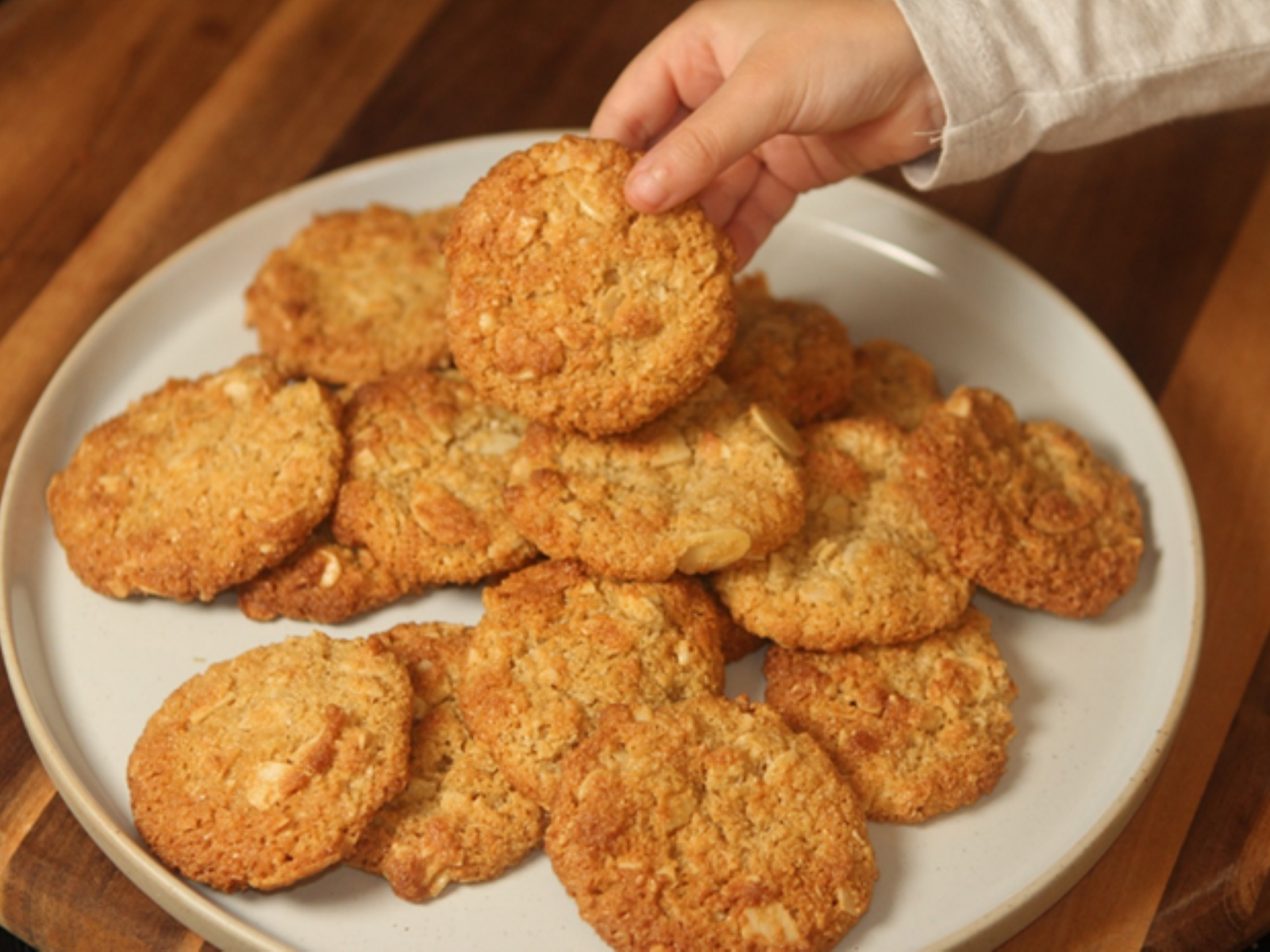

ANZAC-Style Biscuits Recipe
Ingredients
Method
- Preheat oven to 160°C (fan-forced) and line two baking trays with baking paper.
- In a saucepan over low heat, melt butter, golden syrup, brown sugar and vanilla until smooth.
- Transfer to a bowl and stir in almond meal, flaked almonds and coconut.
- Mix bicarb soda with water, then stir through mixture.
- Roll into heaped teaspoon-sized balls and place on trays. Flatten slightly.
- Bake for 12–15 minutes until golden.
- Cool on tray — biscuits will firm as they cool.
Notes
These recipes are designed to help you cook one flexible meal that works for everyone — without making multiple dinners.
I focus on simple ingredients, practical swaps, and real-life cooking. You won’t find perfectly styled food or strict macro tracking here — just balanced, adaptable meals for busy families.
Because food should nourish you — not control you.
This is what flexible family cooking looks like in real life.
Serving Suggestions
- With tea or coffee
- Lunchbox snack
- Crumbled over yoghurt
- Simple dessert with fruit
FAQ
Can I call these ANZAC biscuits?
→ These are best described as ANZAC-style biscuits because they don’t follow the traditional oat and flour-based recipe. The name “ANZAC” is protected, and recipes that significantly change key ingredients are usually labelled as “ANZAC-style” instead.
Why doesn’t this ANZAC-style biscuits recipe use oats?
→ This ANZAC-style biscuits recipe replaces oats with almond meal and flaked almonds to make it gluten free and suitable for more dietary needs. The combination still gives a chewy centre and crisp edges, but with a slightly richer flavour. If you can eat oats, you can switch back for a more traditional result.
Can I make nut free ANZAC biscuits?
→ Yes, but the texture will be different. Quinoa flakes, puffed rice, or lupin flakes are the best alternatives, though they produce a more delicate biscuit that needs careful handling. This version works, but it won’t be identical to a traditional ANZAC biscuit.
Why did my ANZAC-style biscuits spread too much?
→ This usually happens if the mixture is too warm or soft before baking. Chilling the dough for 10–15 minutes can help control spreading and improve structure. You can also add a small amount of extra coconut if the mixture feels too loose.
Are these crunchy or chewy?
→ These biscuits have crisp edges and a soft, chewy centre. They will feel quite soft straight out of the oven but firm up as they cool on the tray. For a crunchier result, bake slightly longer until deeper golden.
Can I make these dairy free?
→ Yes, butter can be replaced with a dairy-free butter alternative or coconut oil. This swap works well because the structure mainly comes from the dry ingredients and syrup, not the butter itself. The flavour may change slightly, but the texture will still hold.
More Adaptable Recipes You’ll Love
If you regularly cook for different dietary needs, having a flexible approach makes everything easier. My flexible family cooking method shows you how to build meals that work for everyone without cooking multiple dinners.
Enjoyed this ANZAC-Style Biscuits recipe? Try these adaptable recipes next:
Tried This Recipe?💬
Leave a comment and share what swaps you used — it helps other families more than you think!


Leave a Reply